Do Antihistamines Treat Undermethylation, MTHFR Dysfunction, Slow COMT?
This is an article in a series I’m doing in response to the load of questions I received for my first AMA. Thanks to all who sent! I’ll be keeping these articles short and to the point. Excuse any typos here as I am typing/formatting fast so I can get through all your questions.
Near verbatim text of the question I received:
“I know people having relief and enhanced health following the use of antihistamine drugs. Do these treat root cause or only remedy a piece of the puzzle of what’s happening inside body?”
I interpret this question as being in the context of methylation.
Firstly, and most broadly:
Do Antihistamines help with methylation, MTHFR variants/mutations, and Slow COMT?
They absolutely can, with certain caveats. One of the main ways that undermethylation and MTHFR mutations (term used imprecisely of course) cause symptoms is poor histamine breakdown.
Histamine is a molecule that in the body goes to a bunch of your organs and tissues, including your brain, airway, skin, etc. to produce inflammatory-type reactions, contraction of smooth muscles, dilation of blood vessels, and itching.
This is why high-histamine people feel light-headed, headachey, itchy, inflamed, and brain foggy, and it’s why many people end up being diagnosed with (or self-diagnosing) POTS. As a side note, this is one of multiple key ways that methylation deficits and POTS are interconnected.
Methylation is involved in breaking down histamine in the body.
In fact, methylation is the MAIN way that your body breaks down internal histamine (as opposed to histamine in the gut).
Specifically, as I’m sure you know, the central methylation-related molecule in the body is called SAMe. That molecule in turn fuels a bunch of enzymes that are dependent on the presence of methyl groups (carbon bound to 4 hydrogen atoms).
One of the enzymes that SAMe fuels is HNMT (Histamine N-methyltransferase). HNMT requires SAMe, and thus methylation, to be able to function. So much so that a high gross level of histamine in the body (which you can indeed test), is a very very good sign of undermethylation and one of the most overlooked markers in the methylation testing repertoire.
Note, however, that histamine is a very specific marker for undermethylation but also a highly insensitive one.
In other words:
if histamine is high, you almost certainly are undermethylated…
but if histamine is normal, that does not mean that you are not undermethylated.
Not focusing on HNMT and only focusing on DAO (which breaks down histamine in the gut) is one of the main pitfalls I see in people with histamine overload.
And, by extension, not focusing on methylation in “histamine intolerant” people is a huge pitfall.
Because of the central role of histamine in methylation issues, anti-histamine drugs can be very helpful symptomatically in these cases, simply by affecting the way that histamine impacts your body.
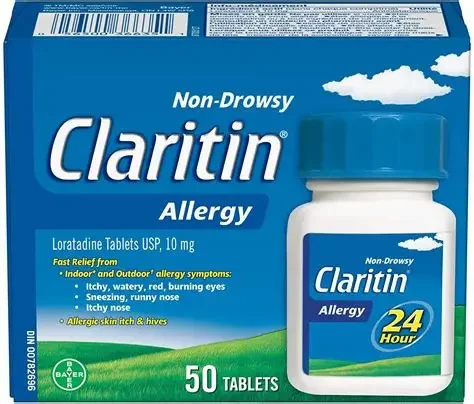
The most important thing to remember, however, is that anti-histamines do not lower total body histamine! You can take all the Claritin and Zyrtec you want but that will absolutely not lower the total amount of histamine in your body.
Of course, this is because antihistamines function at step of the action of histamine upon histamine receptors, NOT at any step of the production of histamine.
Things like Claritin and Benadryl will simply reduce how much your body responds to the histamine that is there, but not how much is there overall.
If your primary undermethylation symptoms are histamine-related, this is of course extremely helpful, but only to a degree, because there is a very slight level of tolerance that the body develops to antihistamines over time (some more than others), making them less effective at reducing these symptoms.
Antihistamines also have other negatives, of course, which make me absolutely avoid recommending long-term, frequent usage of them whenever possible. They’re best reserved for rescue-type scenarios.
It’s important to remember that antihistamines do absolutely nothing to reduce overall body methylation burden, because the histamine is still there, and your body still has to get rid of it using the little SAMe that you have.
Ultimately, homocysteine recycling (if that’s the problem) will still be a problem, and you’ll still suffer from the non-histamine-related symptoms of undermethylation.
So antihistamine drugs are definitely not a root cause fix for anything methylation related but definitely can be helpful used intermittently and occasionally for some of the symptoms, until you actually fix the issue.
Read more of what I’ve written on this issue:
What Supplements Should I Take for Histamine Intolerance? — Dr. Malek's MTHFRSolve
Join my private Roadmaps Subscription + Facebook group to ask questions and get direct answers. Join here:
EVERYTHING in this article is purely educational and informational in nature. None of this is medical advice. Make no health changes based on this article. I am not your doctor. Discuss any and all implementations with your own doctor.
READ MORE:







This short article has the potential to be highly impactful for the subset of people dealing with the following exact intersection of macroscopic bodily issues:
GI issues (e.g. IBS, IBD, SIBO, slow digestive motility, etc.)
post-exertional malaise (which we’ll call PEM, from now on, i.e. feeling real bad after exercise and other exertion),
and migraines.